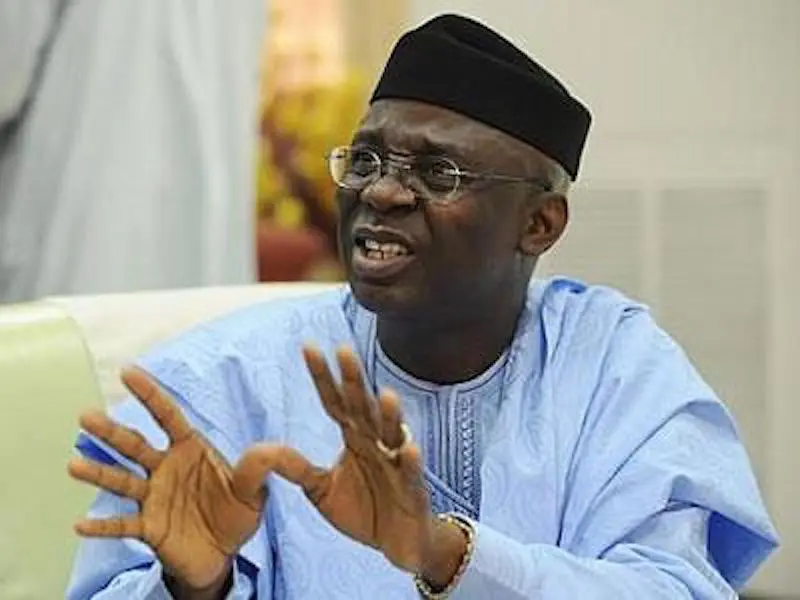
There are pastors who stay carefully behind their pulpits and there are those who step into the public square — willing to be hated, arrested, and misunderstood in the service of what they believe. Tunde Bakare belongs firmly in the second category. For four decades, he has been one of Nigeria’s most provocative and courageous religious voices: a lawyer by training, a prophetic preacher by calling, and a political activist by conviction. His willingness to criticise power — including from the pulpit — has made him simultaneously one of the most admired and most controversial figures in Nigerian public life.
Tunde Bakare Biography
| Full Name | Gbolahan Babatunde Bakare |
|---|---|
| Date of Birth | 11 November 1954 |
| Place of Birth | Abeokuta, Ogun State, Nigeria |
| Nationality | Nigerian |
| Religion | Christianity (converted from Islam) |
| Occupation | Pastor, Lawyer, Political Activist |
| Wife | Olayide Bakare |
| Church | The Citadel Global Community Church (formerly Latter Rain Assembly) |
| Known For | Founding Latter Rain Assembly; 2011 vice-presidential candidacy; bold political preaching; civil activism |
Early Life and Background
Tunde Bakare — born Gbolahan Babatunde Bakare on 11 November 1954 in Abeokuta, Ogun State — entered the world into a family steeped in Islamic heritage. His early childhood was marked by financial difficulty; he grew up in a home that knew the weight of poverty, raised under the care of a widowed mother whose discipline and entrepreneurial resilience left a deep impression on his character. By his own account, he crawled on his buttocks for the first three years of his life — a physical challenge that set the tone for a life that would be defined by unlikely perseverance.
He converted from Islam to Christianity in 1974, a transformative moment that altered the direction of his life entirely. That conversion would prove decisive: within a decade, the man who had been born into one faith had become one of the most recognisable preachers in the other.
Education
Bakare received his early education at All Saints Primary School in Kemta, Abeokuta, and then at Lisabi Grammar School. He went on to study law at the University of Lagos, graduating with a law degree. He was called to the Nigerian Bar in 1981 and completed his National Youth Service Corps (NYSC) thereafter. His legal training gave him the forensic rigour and rhetorical sharpness that would become signature elements of his preaching and public commentary style.
Legal Career Before Ministry
Before dedicating himself fully to pastoral work, Bakare practised law at some of Nigeria’s most respected chambers, including the legendary Gani Fawehinmi Chambers, Rotimi Williams & Co, and Burke & Co. In October 1984, he established his own law firm, Tunde Bakare & Co (El-Shaddai Chambers). His legal career gave him exposure to justice issues, civil rights, and the mechanics of power — all of which would later inform his approach to ministry and activism.
Ministry Career
Bakare served in the Deeper Life Bible Church before moving to the Redeemed Christian Church of God. On 1 April 1989, he founded The Latter Rain Assembly in Lagos — the church that would become his primary platform for the next three decades. Under his leadership, the Assembly grew into a significant congregation known for its doctrinal seriousness, its prophetic emphasis, and its uncompromising rejection of what Bakare called “extra-biblical” practices in the church.
The church later rebranded as The Citadel Global Community Church, reflecting Bakare’s vision of a globally connected, intellectually grounded Christian community. He also established the Global Apostolic Impact Network (GAIN), a network of churches, ministries, and kingdom businesses. His ministry in the United States is managed through Latter Rain Ministries, Inc. (Church Development Center) in Atlanta, Georgia.
Political Activism and Vice-Presidential Candidacy
Bakare has never confined his concerns to the church. He was arrested and briefly detained during the Obasanjo administration for preaching sermons that were seen as overly critical of the government — a badge he wore without apology. He was among the key figures in Nigeria’s pro-democracy and accountability movements in the 2000s.
His most prominent political moment came in 2011 when General Muhammadu Buhari chose him as his running mate for the presidential election under the Congress for Progressive Change (CPC). The Buhari-Bakare ticket lost to incumbent President Goodluck Jonathan, but the pairing elevated Bakare’s national profile significantly and cemented his image as a man willing to put his ministry credibility on the line for political causes he believed in.
Personal Life
Tunde Bakare is married to Olayide Bakare. He has children. He has spoken publicly about the many chapters of his life — the poverty, the conversion, the legal career, the ministry, and the politics — in both sermons and interviews, and released an autobiography that documents the breadth of his journey.
Frequently Asked Questions
Who is Tunde Bakare?
He is a Nigerian pastor, lawyer, and political activist, best known as the founder of The Citadel Global Community Church (formerly Latter Rain Assembly) and for his bold public commentary on Nigerian politics and governance.
What religion was Tunde Bakare born into?
He was born into a Muslim family in Abeokuta, Ogun State, and converted to Christianity in 1974.
Did Tunde Bakare run for vice president?
Yes, he was Muhammadu Buhari’s running mate in the 2011 Nigerian presidential election under the Congress for Progressive Change (CPC).
What is the name of Tunde Bakare’s church?
The Citadel Global Community Church, formerly known as Latter Rain Assembly, based in Lagos, Nigeria.
Was Tunde Bakare ever arrested?
Yes, he was arrested during the Obasanjo administration for delivering sermons that were critical of the government’s policies.

Ademola Olasegun is a Nigerian writer, researcher, and digital media professional with over a decade of experience creating informative content across technology, education, business, lifestyle, and public affairs. Passionate about making complex topics easy to understand, he has built a reputation for producing well-researched articles that combine accuracy, clarity, and practical value for readers. His work focuses on helping audiences stay informed through credible reporting, in-depth analysis, and engaging storytelling.
Throughout his career, Ademola has collaborated with online publications, content platforms, and independent media projects, contributing articles, research reports, and editorial content tailored to diverse audiences. With a strong commitment to fact-checking and evidence-based writing, he continuously explores emerging trends, conducts extensive research, and transforms data into accessible insights. Through his work at JustKnow, Ademola aims to provide readers with trustworthy information that empowers better decisions and promotes lifelong learning.