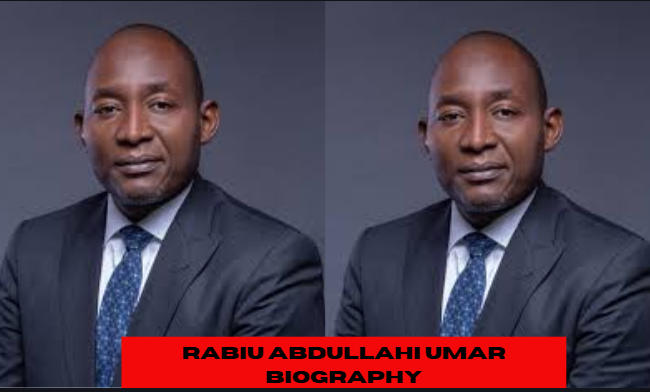
There’s a particular kind of leader who doesn’t seek the spotlight but keeps finding themselves in it anyway — not because of controversy, but because of results. Rabiu Abdullahi Umar is that kind of person. A seasoned corporate executive with more than two decades of experience spanning downstream petroleum and cement manufacturing, Umar’s name became national news when President Bola Tinubu nominated him as the new Authority Chief Executive of the Nigerian Midstream and Downstream Petroleum Regulatory Authority (NMDPRA). For many Nigerians, the name was new. For those in the boardrooms of Dangote, Lafarge, and Oando, it was anything but.
This isn’t a biography of a man who stumbled into prominence. It’s the story of someone who built, layer by layer, a career that consistently placed him at the intersection of strategy, transformation, and leadership — across some of Nigeria’s most demanding industries.
Who Is Rabiu Abdullahi Umar?
Rabiu Abdullahi Umar is a Nigerian corporate executive and regulatory figure, most recently appointed by President Bola Tinubu as the Authority Chief Executive of the Nigerian Midstream and Downstream Petroleum Regulatory Authority (NMDPRA). Before this high-profile public appointment, he had built an impressive private sector career spanning Oando Plc, Lafarge Africa Plc, Ashaka Cement Plc, and Dangote Industries Limited.
What makes Umar’s profile distinctive is the breadth of industries he has navigated — from petroleum marketing to cement manufacturing — and the consistency with which he has led transformation efforts at each stop. He’s not simply a manager who maintained the status quo. At every organisation, he was brought in — or rose — to shake things up.
Rabiu Abdullahi Umar Biography
| Detail | Information |
|---|---|
| Full Name | Rabiu Abdullahi Umar |
| Nationality | Nigerian |
| Profession | Corporate Executive / Regulatory Chief |
| Current Role | Nominated Authority CE, NMDPRA |
| Education | Bayero University Kano; Harvard Business School (Alumni) |
| Field | Petroleum, Cement Manufacturing, Strategy |
| Religion | Islam |
| State of Origin | Northern Nigeria (Kano, based on academic background) |
| Net Worth | Not publicly confirmed |
| Date of Birth | Not publicly disclosed |
| Height | Not publicly available |
| Marital Status | Married |
Early Life and Background
Specific details about Rabiu Abdullahi Umar’s childhood and upbringing have not been widely publicised — a reflection, perhaps, of a man who prefers his work to speak on his behalf. What is known places him firmly within the northern Nigerian context, with his academic foundation at Bayero University Kano pointing to roots in Kano State, one of Nigeria’s most commercially active states and historically a hub of trade and industry.
Growing up in northern Nigeria during a period of significant economic transition would have shaped a young Umar’s understanding of markets, commerce, and the role of enterprise in community development. Kano, in particular, has long been a city where business acumen is treated almost as a cultural inheritance — and for someone who would go on to lead marketing transformations at multinational companies, that context matters.
His early trajectory suggests a young man who was drawn to numbers and systems. Choosing accounting as a course of study is rarely an accident; it speaks to an analytical mind that finds order in complexity, a trait that would define his entire professional life.
Education: From Kano to Harvard
Bayero University Kano gave Umar his first formal grounding — a degree in Accounting that equipped him with the financial literacy needed to eventually think in terms of corporate strategy, not just spreadsheets. BUK, as it is commonly known, is one of Nigeria’s premier universities and has produced a remarkable number of public and private sector leaders.
But it was his time as an alumnus of Harvard Business School that signals the kind of intentional career development that separates good executives from great ones. Harvard Business School doesn’t confer a passive credential — it demands rigorous engagement with real-world business problems, case studies, and peer learning among some of the world’s most driven professionals.
The combination of a Nigerian university foundation and a Harvard business education is a potent one. It blends local market understanding with global strategic frameworks — exactly the kind of dual literacy required to lead organisations operating in complex, competitive environments like Nigeria’s downstream petroleum sector.
He is also a member of the Institute of Directors, further cementing his standing as a governance-conscious professional who takes fiduciary responsibility seriously.
Career Beginnings at Oando Plc
Every long career has a starting point, and for Rabiu Abdullahi Umar, that was Oando Plc, one of Nigeria’s largest indigenous energy companies. He didn’t walk into a corner office — he worked his way up through the marketing division, accumulating experience and building expertise with each role.
What stands out about this phase of his career isn’t just longevity, but direction. He wasn’t simply executing tasks; he was developing a specialism in sales and marketing within the downstream petroleum space — understanding how fuel moves from refineries to end users, how pricing works, and how customer relationships drive commercial outcomes.
His crowning achievement at Oando was leading the company’s Sales and Marketing Transformation Plan — a project that required both analytical depth and the ability to bring people along on a change journey. Transformation programmes often fail not because of bad strategy, but because of poor execution and resistance from within. That Umar led one successfully suggests he understood both the technical and human sides of change management early in his career.
The Lafarge Chapter: Strategy Across Borders
In 2014, Umar made a significant pivot — moving from petroleum into cement manufacturing when he joined Lafarge Africa Plc as Energy and Power Director. On the surface, it might seem like an unusual move. But look closer and the logic is clear: large-scale manufacturing and downstream petroleum share fundamental challenges around supply chain, logistics, energy cost management, and commercial strategy.
He didn’t stay in that role for long before expanding his remit. Umar took on responsibility for Strategy and Business Development across West Africa, overseeing key projects in Nigeria, Ghana, and Cameroon. This was no longer a country-specific role — it was a regional mandate, requiring diplomatic sensitivity, cross-cultural management, and the ability to operate in multiple regulatory environments simultaneously.
This chapter of his career is arguably where he evolved from a high-performing functional manager into a genuine strategic executive — someone capable of thinking beyond a single market, a single product, or a single team.
Leading Ashaka Cement: A Turnaround Story
In 2016, Rabiu Abdullahi Umar was appointed Managing Director and Chief Executive Officer of Ashaka Cement Plc — and the word that best describes what followed is “turnaround.” Ashaka Cement, headquartered in Gombe State, is one of Nigeria’s oldest cement producers. By the time Umar took the helm, the business needed strategic recalibration.
Turnaround leadership is among the most demanding forms of management. It requires a clear-eyed diagnosis of what’s broken, the courage to make difficult decisions, and the ability to rebuild team morale while simultaneously restructuring operations. The fact that Umar was handed this task — and that he saw it through until his departure in 2019 — speaks to the trust his employers placed in him and the results he delivered.
Running a manufacturing plant in northeastern Nigeria also involves navigating significant logistical and security challenges. The region had faced considerable instability, and maintaining operational continuity there demands a kind of resilience that goes beyond business school theory.
Dangote Industries: The Commercial Mastermind
After leaving Ashaka Cement in 2019, Umar joined Dangote Industries Limited — the flagship conglomerate of Africa’s richest man, Aliko Dangote — as Group Chief Commercial Officer. This is about as high-profile a private sector appointment as exists in Nigeria, and it placed Umar at the commercial nerve centre of a business empire that spans cement, sugar, salt, flour, and petroleum.
He later transitioned into the role of Group Sales and Marketing Director at Dangote Cement Plc, where his mandate drew directly on the full arc of his career: transformational leadership, commercial strategy, and market development at scale.
Working within the Dangote ecosystem means operating under intense scrutiny and at extraordinary volumes. Nigeria is one of the world’s fastest-growing cement markets, and Dangote Cement commands a dominant share of that market. To lead its sales and marketing function is to manage both complexity and consequence.
Nomination as NMDPRA Chief Executive
The announcement came via a State House press release, issued by Bayo Onanuga, Special Adviser to President Tinubu on Information and Strategy. President Tinubu approved the removal of Saidu Mohammed as Authority Chief Executive of the NMDPRA and nominated Rabiu Abdullahi Umar as his replacement, describing the decision as being in the “public interest.”
The NMDPRA is the body that regulates Nigeria’s midstream and downstream petroleum operations — covering everything from gas processing and transportation to retail fuel distribution. It is a role that sits at the intersection of regulatory oversight, energy policy, and commercial stakeholder management. In short: it is exactly the kind of role that Umar’s career has been building towards.
His nomination signals that the Tinubu administration values private sector experience and transformation credentials in regulatory leadership — a departure from the pattern of appointing career bureaucrats to such roles.
Leadership Style and Professional Philosophy
Reading between the lines of Umar’s career, a particular leadership philosophy emerges. He is, by all indications, a systems thinker — someone who looks at an organisation not as a collection of departments, but as an interconnected set of processes that either work together or work against each other.
His repeated involvement in transformation initiatives — at Oando, Lafarge, and Ashaka — suggests a leader who is drawn to complexity and discomfort rather than the comfort of running a well-oiled machine. He is also clearly results-oriented without being reckless, building credibility at each posting before moving to the next challenge.
His membership in the Institute of Directors reflects a commitment to corporate governance — a quality that will be critically important in his new regulatory role, where balancing industry interests with public accountability is the central challenge.
Personal Life: Family, Wife, and Children
Rabiu Abdullahi Umar keeps his personal life largely away from public view, which is consistent with his general profile as someone who lets professional achievement do the talking. He is married, though his wife’s name has not been disclosed in public sources. Information about his children — how many he has, their ages, or any details about his family life — has similarly not been made available.
This discretion is not unusual for Nigerian executives of his generation, many of whom draw a firm line between their professional and private lives. What can be said is that a career of this intensity — spanning multiple industries, several relocating roles, and a Harvard education alongside active work — typically reflects a person with strong personal support structures.
Net Worth and Financial Standing
Rabiu Abdullahi Umar’s net worth has not been publicly confirmed, and any specific figure would be speculative. What is clear is that his income has been primarily earned from senior executive roles at some of Nigeria’s largest corporations — Oando, Lafarge, Ashaka Cement, and Dangote Industries. Executive compensation at this level in Nigeria typically includes base salary, performance bonuses, and in some cases equity participation.
His transition into a public regulatory role may actually represent a compensation trade-off — regulatory chiefs in Nigeria earn respectable government salaries, but rarely at the level of private sector chief executives of comparable seniority. That he accepted the nomination suggests motivations beyond financial compensation.
Contributions to Nigeria’s Industrial Growth
Across his career, Umar has contributed meaningfully to two of Nigeria’s most economically significant sectors. In petroleum, his marketing work at Oando helped refine how downstream products reached Nigerian consumers. In cement, his strategic work across West Africa and his turnaround of Ashaka Cement contributed to the broader infrastructure development narrative — cement, after all, is what roads, housing, and public buildings are made of.
His new role at the NMDPRA places him in a position to influence how petroleum gets from production to the Nigerian public — a matter of daily relevance for millions of Nigerians who depend on fuel for transport, power generation, and cooking.
What His Appointment Means for the Petroleum Sector
Nigeria’s downstream petroleum sector has long been plagued by inefficiency, subsidy distortions, and regulatory inconsistency. The removal of fuel subsidies under the Tinubu administration has created a new operating environment — one that requires nimble, commercially sophisticated regulatory leadership.
Umar’s background — rooted in commercial strategy and transformation rather than bureaucratic process — suggests the administration wants the NMDPRA to operate more like a strategic regulator than a compliance enforcer. Whether he can translate private sector effectiveness into public sector accountability will be the defining question of his new chapter.
Conclusion
Rabiu Abdullahi Umar’s story is, at its core, a study in deliberate career construction. From accounting student in Kano to Harvard alumnus; from Oando’s marketing floors to Dangote’s commercial strategy; from leading a cement turnaround in Gombe to being nominated to regulate Nigeria’s downstream petroleum sector — each step has been purposeful, each role more demanding than the last.
His appointment to the NMDPRA is not a political reward. It is, by the evidence of his career, a functional match — a regulator who understands the industry he’s being asked to regulate, from the inside out. What Nigeria gets with Rabiu Abdullahi Umar is not a fresh face filling a vacant chair, but an experienced hand taking on one of the country’s most consequential regulatory roles at one of its most important economic moments.
FAQs About Rabiu Abdullahi Umar
1. Who is Rabiu Abdullahi Umar? Rabiu Abdullahi Umar is a Nigerian corporate executive nominated by President Bola Tinubu to serve as the Authority Chief Executive of the Nigerian Midstream and Downstream Petroleum Regulatory Authority (NMDPRA). He has over two decades of experience in downstream petroleum and cement manufacturing.
2. Where did Rabiu Abdullahi Umar study? He holds a degree in Accounting from Bayero University Kano and is an alumnus of Harvard Business School. He is also a member of the Institute of Directors.
3. What companies has Rabiu Abdullahi Umar worked for? His career spans Oando Plc, Lafarge Africa Plc, Ashaka Cement Plc (where he served as MD/CEO), Dangote Industries Limited, and Dangote Cement Plc.
4. Is Rabiu Abdullahi Umar married? Yes, he is married, though details about his wife and children are not publicly available, as he maintains a private personal life.
5. What is Rabiu Abdullahi Umar’s net worth? His net worth has not been publicly confirmed. His wealth is primarily derived from senior executive roles at major Nigerian corporations, and any specific figure would be unverified speculation

Samuel Akinsola is a biography writer and researcher dedicated to uncovering inspiring life stories. He creates well-researched profiles that highlight achievements, challenges, and lasting legacies.