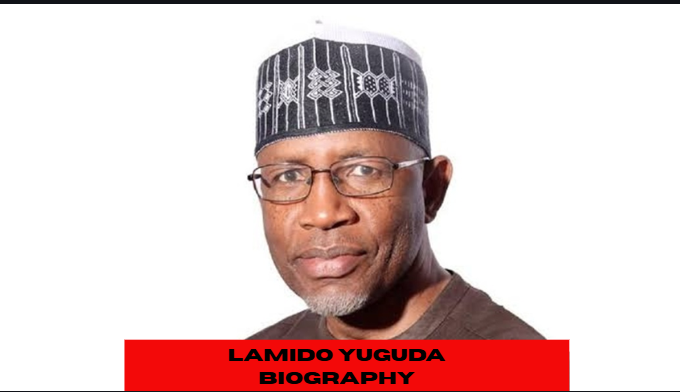
There is a particular type of person who shapes economic policy without ever dominating a newspaper front page. Lamido Abubakar Yuguda is one of those people. Over four decades, he has moved through some of the most consequential financial institutions in Nigeria and the world — the Central Bank of Nigeria, the International Monetary Fund, the Securities and Exchange Commission — accumulating the kind of credibility that isn’t built through press releases, but through results.
In March 2026, President Bola Tinubu nominated him as Deputy Governor of the Central Bank of Nigeria — a move confirmed by the Senate and widely received as a signal that the administration is serious about placing experienced technocrats at the helm of economic institutions. For anyone watching Nigerian finance closely, the appointment wasn’t a surprise. It was a logical destination for a career spent mastering every major layer of the country’s financial architecture.
Lamido Yuguda Biography
| Detail | Information |
|---|---|
| Full Name | Lamido Abubakar Yuguda |
| Profession | Economist, Financial Regulator, Public Servant |
| Education | B.Sc. Accounting, ABU Zaria (1983); M.Sc. Money, Banking & Finance, University of Birmingham (1991) |
| Nationality | Nigerian |
| Religion | Islam |
| Current Role | Deputy Governor, Central Bank of Nigeria (2026–present) |
| Previous Role | Director-General, Securities and Exchange Commission (2020–2024) |
| Professional Memberships | Fellow, ICAN; CFA Charterholder |
| Net Worth | Not publicly confirmed |
Early Life and Background
Lamido Yuguda was born in Nigeria, with strong roots in the northern part of the country. While specific details about his date of birth and hometown are not widely publicized — a deliberate privacy that is consistent with his low-key professional persona — his formative years clearly pointed toward a life in numbers and policy.
By decades of experience and a career spanning multiple pivotal financial institutions, Lamido Yuguda has steadily built a reputation as one of Nigeria’s foremost economists and financial administrators. That reputation didn’t emerge from nepotism or political connections — it was earned through sustained technical performance across institutions that demand real expertise.
His northern Nigerian background also places him within a generation of professionals who came of age during Nigeria’s post-oil boom restructuring — a period that made financial management not just a career choice but an urgent national necessity.
Education
Lamido Yuguda graduated from Ahmadu Bello University, Zaria, where he obtained a B.Sc. in Accounting in 1983. In 1991, he proceeded to further his studies at the University of Birmingham, England, where he obtained an M.Sc. in Money, Banking and Finance. He also holds a certificate in Financial Asset Management and Engineering from the Swiss Finance Institute, Geneva, Switzerland.
That academic progression — from Zaria to Birmingham to Geneva — tells a story of deliberate self-development. Each qualification built on the previous one, moving from domestic accounting fundamentals toward sophisticated global financial theory. The Swiss Finance Institute certification, in particular, is not a cosmetic credential. It represents advanced, specialist knowledge in asset and portfolio management — exactly the skills he would deploy back in Nigeria.
He has also attended leadership training at notable business schools including Harvard, INSEAD, IMD, Saïd, Wharton, Haas, and London. The list is genuinely impressive. These are institutions where regulators and executives from across the world sharpen strategic thinking and governance skills. For Yuguda, they represent a commitment to continuous learning that stretches well beyond formal academic qualifications
He is a Fellow of the Institute of Chartered Accountants of Nigeria (ICAN) and a CFA charterholder. The CFA designation — awarded by the CFA Institute — is considered one of the most rigorous credentials in global investment management. Holding it alongside the ICAN fellowship makes him credentialed in both auditing and investment disciplines simultaneously.
Career Journey: Four Decades at the Heart of Nigerian Finance
Starting at the CBN: 1984
Lamido Yuguda started his career at the Central Bank of Nigeria in 1984 as a supervisor in the Foreign Operations Department. This department manages Nigeria’s external debt records and foreign exchange operations — not an entry-level posting in terms of complexity or consequence.
In 1985, he moved to the Banking Supervision Department and had the task of handling bank licensing and prudential regulations. Moving between departments in the early years gave Yuguda a panoramic view of how the CBN operated — from external finance to domestic banking oversight. It was the kind of exposure that shapes generalist competence on top of specialist skills.
The IMF Chapter: Washington, D.C. (1997–2001)
Following a secondment, he joined the International Monetary Fund in Washington D.C. in 1997 as an economist in the Africa Department. In this position, Yuguda assessed the economic policies and management of balance of payment support programmes in IMF member countries.
This is where his career took on a genuinely international dimension. Working at the IMF means engaging with sovereign economic data from across the African continent, advising on structural adjustment, and negotiating the complex terrain where domestic economic realities meet global financial conditions. It is the kind of work that either breaks economists or produces exceptionally refined ones.
Reserve Management and Legacy-Building (2001–2016)
In 2001, he returned to the CBN to lead a team of staff to restructure and diversify the CBN’s growing forex reserve portfolio. Together with this team, a new investment policy was adopted with the introduction of new asset classes, the appointment of a reputable global custodian and asset managers. Yuguda successfully upgraded the CBN’s in-house fixed-income trading and settlement capabilities and left a state-of-the-art portfolio management system as his legacy.
This is the chapter of his career that deserves the most attention. Managing Nigeria’s foreign exchange reserves — which at peak ran into tens of billions of dollars — is among the highest-stakes responsibilities in the entire Nigerian public financial system. The fact that he oversaw a successful restructuring and diversification of that portfolio, and then built the systems to sustain it after his departure, suggests an administrator focused on institutional legacy rather than personal positioning.
By 2010, he became Director of the Reserve Management Department. He is credited with the strong risk-aware investment culture in the department, and also instilled a disciplined approach to investment evaluation.
He spent 32 years at the Central Bank of Nigeria in various roles. For 16 of these years, he led the team that successfully managed reserve assets that grew to billions of US dollars. He retired from the CBN in 2016.
The SEC Appointment: 2020–2024
In 2020, he was appointed Director-General of the Securities and Exchange Commission by former President Muhammadu Buhari, a position he held until 2024. His tenure at the SEC was marked by efforts to strengthen capital market regulation, enhance transparency, and support market development. Under his guidance, the commission navigated evolving challenges in the Nigerian financial ecosystem while promoting investor confidence.
The capital markets carry different challenges from the central bank — they require a regulator who can balance investor protection with market growth, manage conflicting stakeholder interests, and keep pace with rapidly evolving financial instruments. Yuguda’s track record at the CBN made him a credible choice. His four-year tenure added capital market regulation to an already exceptional CV.
He has also served as Non-Executive Director on the Boards of Africa Finance Corporation (AFC), National Pension Commission (PENCOM), and Asset Management Corporation of Nigeria (AMCON). These board roles span pension regulation, asset recovery, and continental finance — a breadth of institutional exposure that few Nigerian financial professionals can matc
CBN Deputy Governor: 2026
President Bola Ahmed Tinubu approved the appointment of Lamido Abubakar Yuguda as Deputy Governor of the Central Bank of Nigeria, subject to confirmation by the Senate. The Senate subsequently confirmed that nomination. Yuguda’s nomination follows the recent appointment of the former Deputy Governor, Bala Bello, as Special Adviser to the President on Political Economy.
The return to the CBN — the institution where he began as a supervisor in 1984 — closes a remarkable professional arc. He is now part of the leadership team at an institution he spent most of his career serving.
Leadership Style and Influence: The Technocrat’s Technocrat
Colleagues describe Yuguda as a meticulous technocrat with a measured approach to policy implementation. At the CBN and SEC alike, he has been known for prioritizing sound risk management, adherence to legal frameworks, and fostering capacity building within staff.
That description — “meticulous” — is both a strength and a statement of values. In institutions where impulsive decisions can destabilize currencies or crash investor confidence, methodical precision is not a personality quirk. It is a professional requirement. Yuguda appears to have internalized this instinctively.
His capacity-building focus is also worth noting. Senior officials who invest in the people below them create lasting institutional value. The portfolio management system he left behind at the CBN’s Reserve Management Department is evidence of someone who thinks beyond their own tenure.
Personal Life
Lamido Yuguda keeps his personal life deliberately private, which is consistent with his overall approach to public profile. Specific details about his wife and family have not been disclosed in public records or official statements. He is a Muslim, as is common among many professionals from northern Nigeria, though he has not made religion a public part of his professional identity.
What is clear from his professional biography is that sustained family stability appears to have underpinned a remarkably consistent career — one that required relocating to Washington D.C. for four years, managing intense institutional responsibilities, and maintaining the kind of focus that a career of this scope demands.
Net Worth
Lamido Yuguda’s net worth is not publicly confirmed. His wealth, whatever its extent, has primarily been earned through four decades of senior public service — at the CBN, the IMF, the SEC, and through board memberships at major financial institutions. Senior public officials in Nigeria at his level typically earn structured government compensation, though board roles and professional consultancy can supplement this meaningfully. Any specific figure cited online should be treated with caution, as no official disclosure has been made.
Conclusion
Lamido Yuguda’s biography resists easy summarizing, because it is not a story of sudden prominence or political fortune. It is, instead, a story about what happens when technical ability meets decades of consistent, unglamorous work. He started at the CBN managing external debt records in 1984. He is returning to the CBN in 2026 as Deputy Governor. The journey between those two points — through the IMF’s Africa Department, through Nigeria’s capital markets, through executive education programmes on multiple continents — represents one of the most coherent career arcs in Nigerian public finance.
As Nigeria navigates complex economic challenges from inflationary pressures to global oil market volatility, the return of a seasoned financial technocrat like Lamido Yuguda signals continuity, expertise, and a focus on institutional strength. That, in itself, may be the most important thing to understand about why his appointment matters.
FAQs
1. What is Lamido Yuguda’s current role? He was confirmed by the Nigerian Senate as Deputy Governor of the Central Bank of Nigeria in 2026, following his nomination by President Bola Tinubu.
2. Where did Lamido Yuguda study? He holds a B.Sc. in Accounting from Ahmadu Bello University, Zaria (1983), an M.Sc. in Money, Banking and Finance from the University of Birmingham (1991), and a certificate in Financial Asset Management and Engineering from the Swiss Finance Institute, Geneva.
3. What did Lamido Yuguda do at the IMF? Between 1997 and 2001, he worked as an economist in the IMF’s Africa Department, assessing economic policies and managing balance of payment support programmes for member countries.
4. What is Lamido Yuguda’s religion? He is a Muslim.
5. Is Lamido Yuguda’s net worth publicly known? No. His net worth has not been officially confirmed. His earnings have come primarily from senior roles in public financial institutions, board memberships, and professional service.

Samuel Akinsola is a biography writer and researcher dedicated to uncovering inspiring life stories. He creates well-researched profiles that highlight achievements, challenges, and lasting legacies.