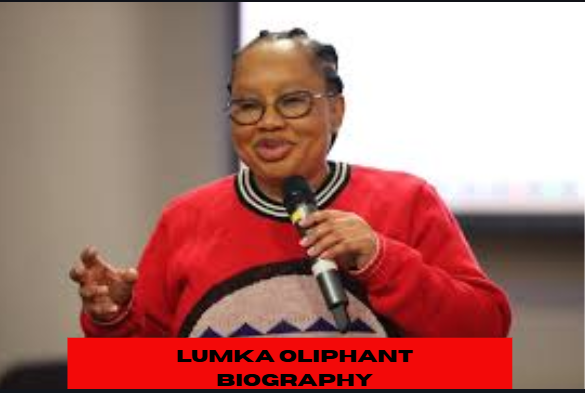
In South African public life, government spokespersons are generally expected to stay in the background — managing messaging, deflecting media pressure, and protecting the minister they serve. Lumka Oliphant spent years doing exactly that, building a reputation as one of the more competent communicators in the national government’s orbit.
Then she was fired. And everything changed.
Since her dismissal from the Department of Social Development in October 2025, Oliphant has transformed from institutional insider to one of the most publicly vocal critics of the very ministry she once defended. Her explosive counter-claims against Minister Sisisi Tolashe — allegations touching on parliamentary dishonesty, financial irregularities, and leadership failure — have turned what might have been a quiet bureaucratic exit into one of the more riveting government disputes in recent South African political memory.
She is 47 years old, widely experienced in government communications, and apparently uninterested in going quietly. That combination makes her worth paying close attention to.
Lumka Oliphant Biography
| Detail | Information |
|---|---|
| Full Name | Lumka Oliphant |
| Age | 47 years old |
| Nationality | South African |
| Profession | Government Communicator, Spokesperson |
| Former Role | Spokesperson, Department of Social Development |
| Known For | Whistleblowing against Minister Sisisi Tolashe |
| Dismissal Date | October 17, 2025 |
| Social Media | Facebook: Lumka Oliphant |
Early Life and Background
Lumka Oliphant’s early life and family background have not been extensively documented in the public record — a reality that is not uncommon for government communications professionals, whose careers are often built in the service of others rather than under personal spotlight.
What can be said with confidence is that she is South African, approximately 47 years of age, and built a career trajectory that eventually placed her at the center of national government communications. The Eastern Cape political and cultural environment — which has produced a disproportionate number of South Africa’s public sector leaders — may well form part of her background, though this has not been formally confirmed in available records.
Her path into government communications suggests a combination of formal education in relevant fields and years of practical experience navigating the complex interface between public institutions and media. In South Africa, that interface is rarely smooth, and spokespersons who last in senior roles tend to be both thick-skinned and strategically sharp. Oliphant appears to have been both.
Education
The specific details of Lumka Oliphant’s formal educational qualifications have not been made publicly available. In the context of her dismissal controversy, however, education became unexpectedly relevant — she directly accused Minister Tolashe of appointing an unqualified person in the department, a charge the ministry disputed.
Given the seniority of her communications role, it is reasonable to infer that she holds qualifications in communications, journalism, public relations, or a related field — though no institution or degree has been officially confirmed in public records. Her career trajectory suggests substantial practical expertise accumulated over years of work in government and media environments.
Career Journey
Building a Career in Government Communications
Lumka Oliphant spent a significant portion of her professional life working within South Africa’s government communications infrastructure — a space that requires navigating political sensitivity, departmental bureaucracy, and media scrutiny simultaneously. It is not a role for the faint-hearted, particularly in departments dealing with social welfare, where policy failures tend to attract sustained public and journalistic attention.
She rose to the position of departmental spokesperson for the Department of Social Development, one of South Africa’s most politically sensitive ministries. The department is responsible for social grants, child protection, elder care, and social welfare services — functions that affect millions of South Africans, and that attract intense scrutiny from civil society, opposition parties, and investigative journalists alike.
A spokesperson in this environment is never simply a press officer. They are, in practice, a frontline political operator — managing crises, crafting narratives, shielding ministers from uncomfortable questions, and deciding which information reaches the public and in what form. That Oliphant held this role for an extended period speaks to a level of competence and institutional trust that her dismissal has now called into complicated question.
The Suspension and Dismissal
On September 1, 2025, Oliphant was placed on precautionary suspension by the Department of Social Development. The suspension came amid what the ministry described as conduct issues — though no detailed public explanation was offered at the time, which itself fuelled speculation.
On October 17, 2025, she was formally dismissed.
What followed was anything but a quiet exit. In a voice note widely reported by TimesLIVE, Oliphant launched a pointed and detailed counter-offensive, accusing Minister Sisisi Tolashe of deflecting accountability while engaging in a series of alleged irregularities. The specificity of her claims was notable — she was not speaking in vague generalities. She referenced parliamentary records, auditor-general processes, and alleged financial impropriety in a manner that suggested someone who knew exactly where to look.
The Allegations and Counter-Allegations
Oliphant’s public statements following her dismissal represent the most significant chapter of her public profile. She accused the minister of appointing unqualified personnel, defying cabinet by granting the Director-General a five-year contract against the one-year term approved, shielding an adviser who allegedly lacked proper qualifications, lying to parliament, and advertising a senior post without presidential approval.
She also raised questions about luxury vehicles — reportedly two SUVs allegedly gifted by Chinese officials — that Minister Tolashe had maintained were donated to the ANC Women’s League. Opposition parties, including ActionSA and the Democratic Alliance, subsequently laid criminal complaints against the minister on related matters.
The ministry’s response was swift and combative. It accused Oliphant of orchestrating a “deliberate and sustained campaign” of misinformation designed to damage Tolashe’s reputation — framing her public statements as self-serving attempts to deflect from the reasons for her own dismissal.
Neither side has shown any inclination toward de-escalation. In a Facebook post that quickly gained traction, Oliphant wrote in isiXhosa: “Isukile. Uyandiqala uGladys” — loosely translated as “It has begun. Gladys is provoking me.” It was a very human moment in an otherwise institutional dispute, and it suggested that whatever comes next, Oliphant is not finished speaking.
Influence, Leadership Style, and Public Impact
What Oliphant’s case illustrates — regardless of how the specific allegations are ultimately resolved — is something important about South Africa’s accountability ecosystem. Government communicators occupy a structurally awkward position: they are paid to protect institutions, but they also witness institutional conduct from close proximity. When they are dismissed, they carry institutional knowledge that can become publicly significant.
Oliphant’s willingness to speak publicly and in specific terms has made her case unusual. Most dismissed government employees, particularly at senior levels, tend toward legal channels and negotiated silence. Her choice to engage directly with media — through voice notes, Facebook posts, and direct challenges to the minister — reflects either exceptional confidence in the validity of her claims, a strategic calculation about public pressure, or both.
She specifically challenged Tolashe to account for her conduct regarding vulnerable populations — children, elderly citizens, and social grant recipients — invoking the department’s core mandate as a measure of the minister’s failure. That framing was not accidental. It positioned her critique not as personal grievance but as public interest concern.
Whether or not her allegations are ultimately substantiated, she has demonstrated that South African government communicators are not simply passive instruments of ministerial messaging. They are political actors in their own right — and when pushed, some of them push back hard.
Personal Life
Lumka Oliphant’s personal life — her family, spouse, and children — has not been made part of the public record, and she has not used personal details as part of her public positioning in the current controversy. That restraint is notable, given how intensely personal the dispute with Minister Tolashe has become in other respects.
What emerges from her public statements is a person of strong convictions and evident emotional investment in the issues she is raising — not someone who separated professional conduct from personal values. Her invocation of South Africans who are “suffering” under the current departmental leadership suggests someone who genuinely connected the work of the department to real human outcomes, rather than treating the role as simply a career position.
Beyond that, speculation would be unfair. Her personal life, including details about a partner or children if applicable, remains her own.
Net Worth
Lumka Oliphant’s net worth has not been publicly disclosed or independently verified. Her income has been primarily derived from her career in government communications, a sector that offers stable but not exceptional remuneration at senior non-executive levels. There is no publicly available information to support any specific financial estimate, and readers should treat any figures circulating online with appropriate skepticism.
Social Media
- Facebook: Lumka Oliphant (search: Lumka Oliphant)
- She has been notably active on Facebook during the current controversy, with posts in both English and isiXhosa that have attracted significant public attention.
Conclusion
Lumka Oliphant entered most South Africans’ awareness not through years of quiet public service — though she had those — but through the sharp and specific allegations she made after losing her job. That is an uncomfortable kind of visibility, and it is not one she appears to have sought for its own sake.
What makes her story genuinely significant is what it reveals about the inner mechanics of ministerial accountability in South Africa. The allegations she has raised — about qualifications, contracts, parliamentary honesty, and financial conduct — are the kind that parliamentary committees, the Public Protector, and the Auditor-General are specifically designed to investigate. Whether those processes will be engaged, and what they will find, remains an open question.
At 47, Oliphant is neither at the beginning nor the end of her professional story. But the chapter she is currently writing — loudly, publicly, and with a degree of specificity that demands institutional response — may turn out to be the most consequential one.
FAQs
1. Who is Lumka Oliphant? Lumka Oliphant is a South African government communications professional who served as the official spokesperson for the Department of Social Development. She was dismissed in October 2025 and has since made several high-profile public allegations against Minister Sisisi Tolashe.
2. Why was Lumka Oliphant dismissed? According to the Department of Social Development, Oliphant was placed on precautionary suspension on September 1, 2025, and formally dismissed on October 17, 2025. The ministry has cited conduct issues but has not released full details publicly. Oliphant disputes the basis for her dismissal.
3. What allegations did Lumka Oliphant make against Minister Tolashe? Oliphant accused the minister of appointing unqualified staff, defying cabinet decisions regarding the Director-General’s contract, lying to parliament, and various financial irregularities including allegations related to luxury vehicles allegedly gifted by Chinese officials.
4. How old is Lumka Oliphant? Lumka Oliphant is 47 years old.
5. Is Lumka Oliphant active on social media? Yes. She has been publicly active on Facebook during the controversy surrounding her dismissal, posting in both English and isiXhosa. Her posts have attracted wide attention and media coverage.

Samuel Akinsola is a biography writer and researcher dedicated to uncovering inspiring life stories. He creates well-researched profiles that highlight achievements, challenges, and lasting legacies.