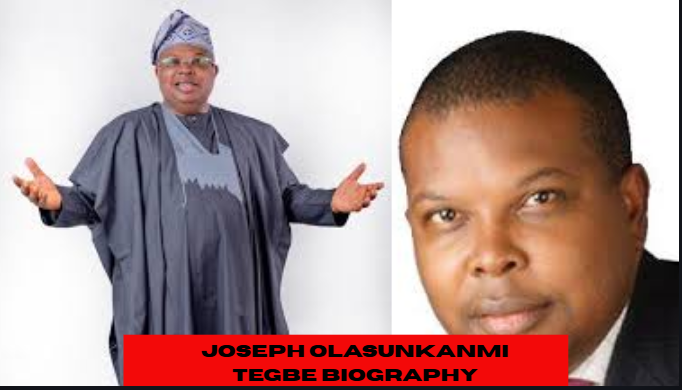
Nigeria’s electricity problem is not new. Decades of policy failure, infrastructure decay, and misaligned incentives have made power supply one of the country’s most persistent and economically damaging challenges. So when President Bola Tinubu nominated Joseph Olasunkanmi Tegbe as Minister of Power, it was not a random political appointment. It was a signal — that the administration wanted someone who had spent thirty years inside the engine room of institutional reform, sector advisory, and technology strategy to take a serious shot at fixing what many have failed to fix before.
Tegbe is not a politician who stumbled into the energy sector. He is a First Class civil engineer, a Fellow of two major professional bodies, an alumnus of Harvard, INSEAD, and Lagos Business School, and a Senior Partner at KPMG Nigeria with deep experience advising both private corporations and government agencies — including regulators in the very power sector he has now been nominated to lead. His appointment, which follows the resignation of Adebayo Adelabu to contest an elective office in Oyo State, brings to the Ministry someone whose entire professional DNA is oriented around solving complex systems problems.
Whether that translates into real change for millions of Nigerians who still rely on generators and inverters remains to be seen. But few nominees in recent memory have arrived with this level of relevant preparation.
| Detail | Information |
|---|---|
| Full Name | Joseph Olasunkanmi Tegbe |
| Date of Birth | March 21, 1966 |
| Age | 60 years old |
| Place of Birth | Oyo Town, Oyo State, Nigeria |
| Nationality | Nigerian |
| Tribe / Ethnicity | Yoruba (Ibadan descent) |
| Religion | Christianity (Anglican background / RCCG member) |
| State of Origin | Oyo State |
| Profession | Consultant, Engineer, Public Administrator |
| Current Role | Senior Partner, KPMG Nigeria; Nominated Minister of Power |
| Wife | Mrs. Abimbola Tegbe (née Ayandipo) |
| Children | Two sons |
| Net Worth | Not publicly confirmed |
Early Life and Background
Joseph Olasunkanmi Tegbe was born on March 21, 1966, in Oyo Town — one of the historic cities of Yorubaland and a place with deep roots in Oyo State’s cultural and political landscape. His ancestral ties trace back to Jegede Compound in the Labo area of Ibadan, giving him a lineage that connects him to one of Nigeria’s most storied cities, even as he was raised in Oyo Town itself.
Growing up in Oyo in the late 1960s and 1970s meant coming of age in a Nigeria that was rebuilding after civil war and beginning its oil-fueled ambitions. It was a time when education was treated as the primary ladder of social mobility — and families across Yorubaland invested heavily in sending their children to quality schools. Tegbe’s early trajectory suggests he came from a background where academic excellence was both encouraged and expected.
His Yoruba heritage from Ibadan carries its own cultural weight. Ibadan has historically been a city of commerce, scholarship, and resilience — traits that seem to have seeped into how Tegbe has approached his career: methodically, ambitiously, and always with an eye toward institutional impact rather than personal celebrity.
Education
Tegbe’s educational journey is one of the more remarkable aspects of his profile — not because it is long, but because of how strategically layered it is across disciplines.
He began at St Mary’s RCM School in Oyo, then proceeded to the prestigious Federal Government College, Ogbomoso — one of Nigeria’s unity schools designed to foster national integration through merit-based admission. From there, he gained admission to the University of Ife (now Obafemi Awolowo University) in Ile-Ife, where he graduated with a First Class degree in Civil Engineering in 1988. That result, in one of Nigeria’s most rigorous academic environments, immediately marked him as someone operating at the top of his intellectual field.
But Tegbe did not stop there. Over the following decades, he added executive education credentials from the Lagos Business School, INSEAD (one of the world’s top business schools, based in France), the Harvard Kennedy School, and the Harvard Business School. He also became a Fellow of the Institute of Chartered Accountants of Nigeria (FCA), a Fellow of the Chartered Institute of Taxation of Nigeria (FCIT), and holds a certification in Governance of Enterprise IT (CGEIT).
This combination — engineering, accountancy, taxation, technology governance, and executive leadership — is not accidental. It reflects a man who understood early that complex institutional problems require multidisciplinary thinkers. You cannot fix Nigeria’s power sector with engineering knowledge alone. You need to understand finance, regulation, technology, and governance simultaneously. Tegbe built his education accordingly.
Career Journey
Early Career and Shell
Tegbe’s professional life began in the oil and gas sector — the heartbeat of Nigeria’s economy. Between 1991 and 1992, he served as Head of Materials Accounting at Shell Petroleum Development Company, a role that placed him inside one of the world’s largest energy companies at a formative stage of his career. Shell’s operational discipline and global standards left a clear imprint on how he approached professional rigour in subsequent roles.
Before Shell, he worked as a tax consultant and handled audit engagements across major economic sectors — experiences that gave him a granular understanding of how Nigerian businesses actually operated beneath the surface of their financial statements.
KPMG: The Long Game
The defining chapter of Tegbe’s career has been his tenure at KPMG Professional Services Nigeria, where he rose to the position of Senior Partner and Head of Technology Advisory Services and Markets. He also serves as KPMG Africa Lead for Cybersecurity practice, Public Sector, and Technology, Media and Telecommunications — a regional mandate that extends his influence well beyond Nigeria’s borders.
At KPMG, his work has spanned three decades across institutional transformation, sector reform, strategy development, and technology implementation. His client portfolio has touched virtually every major sector of Nigeria’s economy: telecommunications, financial services, manufacturing, oil and gas, and — critically for his current nomination — the public sector.
His advisory engagements have included the Nigerian Electricity Regulatory Commission (NERC) and the Nigerian Bulk Electricity Trading Company (NBET) — two of the most important institutions in Nigeria’s electricity market. This means Tegbe does not arrive at the Ministry of Power as a stranger to its regulatory architecture. He has sat across the table from these agencies as an adviser. Now, if confirmed, he will sit at the head of the table as minister.
National and International Engagements
Beyond KPMG, Tegbe has served as an active consultant to the Infrastructure and Human Capital Development Policy Commissions of the Nigerian Economic Summit Group (NESG) — a body that shapes economic policy thinking in Nigeria. He has advised the presidency, state governments, and international agencies, giving him a network and policy fluency that most sector-specific technocrats lack.
Leadership Roles and Institutional Commitments
Tegbe’s leadership extends beyond his consulting career into governance and civil society. He serves as Chairman of the National Council for Management Development, a body responsible for developing management capacity across Nigeria’s institutions — a role that aligns directly with his belief in systems thinking and organizational reform.
He also chairs the Boards of Trustees of both the Unity Schools Old Students Association and the Federal Government College Ogbomoso Old Students Association — demonstrating a commitment to the institutions that shaped him. It is a relatively quiet form of service, but it speaks to a man who believes in investing in the structures that produce talent, not just the individuals who emerge from them.
His membership in the Ikoyi Club and the Ibadan Recreation Club places him within Nigeria’s professional elite — networks that, in the Nigerian context, often matter as much as formal qualifications when it comes to getting things done.
The Ministerial Nomination: What It Means and What It Demands
The nomination of Tegbe as Minister of Power comes at a critical juncture. Nigeria’s power sector has undergone significant structural reforms since the privatization of the late 2000s, but electricity supply remains deeply unreliable. Grid instability, metering gaps, tariff disputes, and underinvestment in transmission infrastructure have combined to keep the sector performing well below its potential.
The presidency’s statement accompanying his nomination pointed to specific priorities: strengthening reforms at the Nigerian Electricity Regulatory Commission (NERC), improving grid stability through better coordination and upgrades at the Transmission Company of Nigeria (TCN), and addressing tariff, metering, and market rule implementation gaps.
These are not vague aspirations. They are technical, specific, and politically sensitive — precisely the kind of challenges that require someone with Tegbe’s combination of engineering knowledge, regulatory familiarity, and institutional reform experience. The question is whether the political environment will allow a technocrat to operate with the independence and consistency that real reform demands.
Personal Life: Faith, Family, and Philanthropy
Behind the professional credentials is a man with a rooted personal life. Tegbe is a Christian — raised in the Anglican tradition but currently worshipping at the RCCG Jesus Embassy Parish in Victoria Garden City (VGC), Lagos. His faith appears to be a genuine anchor rather than a social affiliation, consistent with his reputation as someone of measured character.
He is married to Mrs. Abimbola Tegbe (née Ayandipo), who is of Ogbomoso descent — a connection that interestingly links him back to Ogbomoso, where he also attended Federal Government College. The couple have two sons. Details of his family life beyond this have been kept appropriately private, consistent with his generally low public profile despite his professional prominence.
Through the Tegbe Foundation, he supports non-profit and community development initiatives across Nigeria. The Foundation reflects a philanthropic orientation that goes beyond writing cheques — it represents an institutional commitment to social investment that mirrors how he approaches his professional work.
Net Worth
Joseph Tegbe’s personal net worth has not been publicly confirmed or officially disclosed. As a Senior Partner at KPMG Nigeria — one of the Big Four professional services firms globally — his earnings would be consistent with top-tier executive compensation in Nigeria’s consulting sector, which is among the better-remunerated professional categories in the country. Additional income sources likely include board memberships, advisory engagements, and the activities of the Tegbe Foundation. Any specific figure would be speculative and should be treated accordingly.
Conclusion
Joseph Olasunkanmi Tegbe is, by almost any measure, one of the most technically prepared ministerial nominees Nigeria’s power sector has seen. His career reads less like a conventional political biography and more like a deliberate, decades-long preparation for exactly this kind of assignment — someone who studied the right things, worked in the right places, and built the right relationships without losing sight of the country’s deeper institutional challenges.
Whether he can translate that preparation into tangible improvement for Nigerian households and businesses will depend on factors beyond his individual competence: political will, regulatory independence, and the cooperation of vested interests that have historically resisted reform. But if Nigeria’s power sector is ever going to turn a corner, it will need people like Tegbe at the helm — not just for a season, but with sustained commitment and the freedom to implement.
His nomination is a beginning. What comes after confirmation will be the real test.
Frequently Asked Questions (FAQs)
1. Who is Joseph Olasunkanmi Tegbe? Joseph Tegbe is a Nigerian civil engineer, management consultant, and Senior Partner at KPMG Nigeria. He was nominated by President Bola Tinubu as Minister of Power, following the resignation of Adebayo Adelabu to contest an elective office in Oyo State.
2. What is Joseph Tegbe’s educational background? He holds a First Class degree in Civil Engineering from the University of Ife (now OAU). He also attended Lagos Business School, INSEAD, Harvard Kennedy School, and Harvard Business School, and is a Fellow of both the Institute of Chartered Accountants of Nigeria and the Chartered Institute of Taxation.
3. What tribe is Joseph Tegbe? He is of Yoruba descent, with ancestral roots tracing to Jegede Compound in the Labo area of Ibadan, Oyo State.
4. Who is Joseph Tegbe’s wife? He is married to Mrs. Abimbola Tegbe (née Ayandipo), who is of Ogbomoso descent. They have two sons together.
5. What experience does Joseph Tegbe have in the power sector? Through his work at KPMG, Tegbe has advised key power sector institutions including the Nigerian Electricity Regulatory Commission (NERC) and the Nigerian Bulk Electricity Trading Company (NBET). He also has broader expertise in infrastructure reform, sector strategy, and technology implementation that directly applies to the challenges facing Nigeria’s electricity market.

Samuel Akinsola is a biography writer and researcher dedicated to uncovering inspiring life stories. He creates well-researched profiles that highlight achievements, challenges, and lasting legacies.