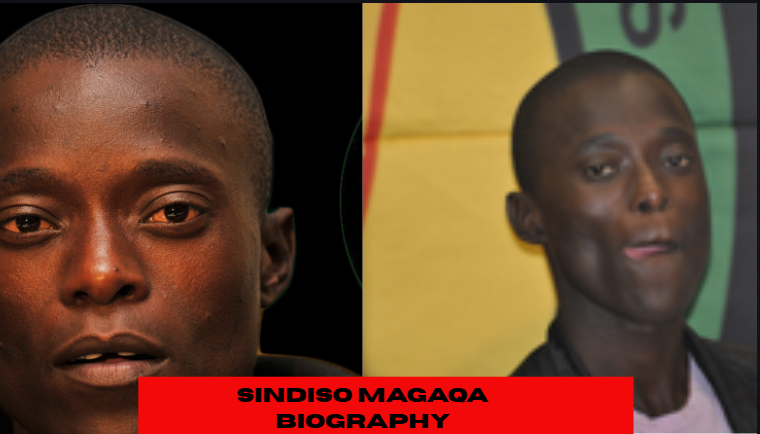
Some political figures leave their mark through decades of service. Others, through the briefest and most turbulent of careers, reveal something essential about the society they lived in. Sindiso Magaqa belongs firmly to the second category. A young politician from the rural township of Ibisi in Umzimkhulu, KwaZulu-Natal, Magaqa rose through South Africa’s most powerful youth political structure only to find himself caught between the promise of public service and the violent underbelly of local government politics.
His story — from a child activist in primary school to Secretary General of the ANC Youth League, and ultimately a local councillor whose life was cut short in a targeted attack — is not simply a biography. It is a window into the pressures, contradictions, and dangers embedded in South African grassroots politics.
| Detail | Information |
|---|---|
| Full Name | Sindiso Magaqa |
| Age at Passing | 35 years old |
| Nationality | South African |
| Ethnicity | Black African |
| Tribe | Zulu (KwaZulu-Natal region) |
| Religion | Not publicly confirmed |
| Political Party | African National Congress (ANC) |
| Profession | Politician, Former Project Manager |
| Education | University of South Africa (UNISA) – Law |
| Spouse/Husband | Not publicly confirmed |
| Net Worth | Not publicly confirmed |
| Social Media | Limited verified presence |
Early Life and Background
Sindiso Magaqa was born and raised in Ibisi, a township in Umzimkhulu — a town with a complicated geographic identity. For most of its history, Umzimkhulu sat within the Eastern Cape, but in 2006 it was formally incorporated into KwaZulu-Natal. This administrative shift shaped the region’s political culture in ways that would become deeply relevant to Magaqa’s later career: questions of governance, local power, and resource allocation in this border community were rarely straightforward.
Growing up in Ibisi, Magaqa was not a passive observer of politics. He joined the Congress of South African Students (COSAS) while still in primary school — a remarkable fact that speaks volumes about the politically charged environment in which he came of age. Post-apartheid South Africa in the 1990s was alive with civic energy, and for many young Black South Africans in rural KwaZulu-Natal, student politics was not just an after-school activity. It was identity, purpose, and community rolled into one.
By 1997, he had formally joined the ANC Youth League (ANCYL), beginning what would become a deeply committed, if turbulent, political journey.
Education
Magaqa pursued legal studies at the University of South Africa (UNISA), one of the country’s largest distance-learning institutions and a popular choice for politically active young South Africans who balance study with public life. His decision to study law reflects both his intellectual ambitions and his understanding that navigating South African politics — especially at the local government level — requires a grasp of legal frameworks, rights, and procedure.
He did not appear to complete a formal legal practice career, but his academic background informed his approach to governance and his work within the municipality.
Career Journey
Rising Through the Youth League
Magaqa’s climb through ANC structures was neither slow nor uneventful. By June 2011, he had ascended to one of the most prominent youth political positions in the country: Secretary General of the ANC Youth League. This was a significant appointment. The ANCYL at that time was a highly visible, often controversial body that wielded real influence within the broader ANC — capable of shaping national conversations around economic policy, land reform, and party direction.
His tenure, however, was short-lived. In April 2012, he was found guilty of misconduct and suspended from the party for a year. The specifics of the misconduct were tied to the broader turbulence within the ANCYL during that period — a league that was simultaneously gaining public attention and fracturing under internal tensions. His suspension marked a turning point, removing him from national prominence and redirecting his political energies toward local government.
Return to Local Politics
After his suspension, Magaqa returned to Umzimkhulu, where he served both as a project manager within the local municipality and, later, as a local councillor in the Umzimkhulu Local Municipality. This shift from national youth politics to hyperlocal governance is telling. For Magaqa, the return home was not a retreat — it was a recommitment to the community he came from.
But local government in Umzimkhulu was no quiet posting. The municipality had long been associated with intense competition over municipal tenders and procurement processes. Investigative reporting and court proceedings have since confirmed that disputes around these tenders formed the backdrop to the political violence that was increasingly visible in the region.
The Attack and Its Aftermath
In July 2017, Magaqa was travelling with colleagues — including other local municipal officials — when he was ambushed and shot multiple times in Umzimkhulu. He was taken to hospital, where he survived for weeks before passing away on 4 September 2017, aged 35.
The attack was widely reported as politically motivated, linked to the volatile tender environment in the municipality. A hitman was subsequently convicted and sentenced in connection with the case, but the investigation did not end there.
The Case Continues — 2026 Developments
As recently as 2026, the Magaqa case remains an active and closely watched matter in South African legal and political circles. The South African Police Service (SAPS) issued a warrant of arrest for MP Fadiel Adams, leader of the National Coloured Congress (NCC), in connection with alleged interference in the Magaqa investigation. According to SAPS, Adams allegedly interfered with the convicted hitman during a sensitive stage of the police investigation — charges that include fraud and obstructing the course of justice.
Adams, who leads a Western Cape party with parliamentary representation, had previously been involved in oversight processes related to policing and political killings. His alleged involvement in the Magaqa case adds yet another unexpected layer to an already complex investigation. SAPS confirmed that despite efforts to locate Adams — including visits to multiple addresses — he had not presented himself to authorities as of the time of the warrant’s issuance.
The case remains one of the most consequential investigations into political violence in post-apartheid South Africa.
Political Legacy and Influence
Magaqa’s legacy is layered. At the national level, he represented the generation of post-apartheid youth who moved through political structures with intensity and ambition. His time as ANCYL Secretary General, despite ending in suspension, positioned him within an important chapter of South African political history — a period when youth movements were openly challenging party elders and debating radical economic transformation.
At the local level, his return to Umzimkhulu and subsequent work as a councillor reflect a different kind of political commitment: unglamorous, community-focused, and ultimately dangerous. The violence that ended his life speaks to the life-and-death stakes embedded in South African municipal politics, particularly in communities where tender contracts represent one of the few pathways to economic power.
His case has contributed to broader national conversations about protecting public servants and political figures operating at the local government level, where state protection is minimal and political competition can turn lethal.
Personal Life
Magaqa was a private person when it came to his family. Details about his parents, romantic relationships, or children have not been confirmed in the public record, and this article will not speculate where verified information does not exist. What is clear is that he was deeply rooted in the Umzimkhulu community, a place that shaped his political identity from childhood.
His ethnicity is Black African, and his cultural and political roots lie in KwaZulu-Natal. His tribal background is associated with the Zulu-speaking communities of the region, though he has not been publicly identified with any particular clan or royal lineage.
Net Worth
Sindiso Magaqa’s net worth was never publicly confirmed, and any specific figure circulating online should be treated with skepticism. His income would primarily have derived from his salary as a local councillor and, previously, from his employment as a project manager within the Umzimkhulu Local Municipality. Neither position would typically generate significant personal wealth.
Social Media
Sindiso Magaqa did not maintain a widely known or verified public social media profile. Given the nature of local municipal politics in South Africa at the time of his career, this was not unusual. Readers seeking information about ongoing developments in the case may follow credible South African news outlets such as Daily Maverick and News24 for verified updates.
Conclusion
Sindiso Magaqa’s life resists easy summarization. He was a product of post-apartheid South Africa’s political machinery — shaped by student activism, propelled into national prominence, disciplined, and then redirected toward the very local community that first formed him. His passing at 35 was a loss not just to Umzimkhulu but to the broader conversation about what accountable, community-grounded governance can look like.
The fact that his case continues to generate legal proceedings, parliamentary controversy, and police action nearly a decade later is perhaps the most significant testament to his political weight. Sindiso Magaqa may be gone, but the questions his life and case raise — about tender corruption, political violence, and accountability — are very much alive.
FAQs
1. Who was Sindiso Magaqa? Sindiso Magaqa was a South African ANC politician from Umzimkhulu, KwaZulu-Natal, who served as Secretary General of the ANC Youth League from 2011 to 2012 and later as a local municipal councillor.
2. How old was Sindiso Magaqa when he passed away? He was 35 years old at the time of his passing on 4 September 2017.
3. What political party did Sindiso Magaqa belong to? He was a member of the African National Congress (ANC) and served in the ANC Youth League.
4. What is the latest news about the Sindiso Magaqa case in 2026? As of 2026, a warrant of arrest was issued for MP Fadiel Adams of the National Coloured Congress, who is accused of allegedly interfering in the ongoing investigation connected to Magaqa’s case.
5. Where did Sindiso Magaqa study? He studied law at the University of South Africa (UNISA)

Samuel Akinsola is a biography writer and researcher dedicated to uncovering inspiring life stories. He creates well-researched profiles that highlight achievements, challenges, and lasting legacies.