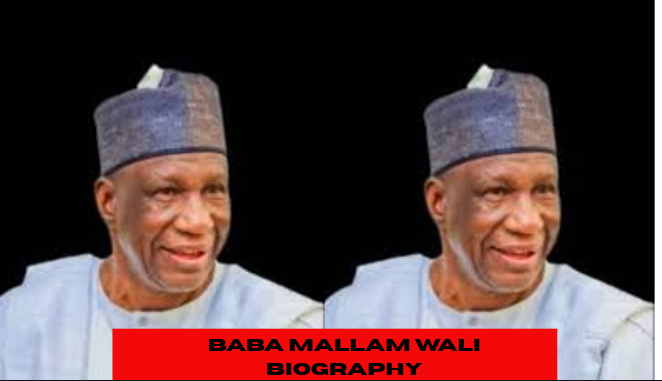
Who Is Baba Mallam Wali? – There is a particular kind of political figure that rarely makes headlines for controversy — one who builds influence through consistency, institutional knowledge, and patient service. Baba Mallam Wali is that kind of figure. A career administrator from Yobe State in northeastern Nigeria, Wali has spent decades embedded in the mechanics of government, accumulating the kind of experience that money cannot buy and campaigns cannot manufacture overnight.
Now in the spotlight following the Yobe State APC Critical Stakeholders’ Forum’s endorsement of him as the preferred governorship candidate for the 2027 election, Baba Mallam Wali is no longer just a behind-the-scenes technocrat. He is a man whose trajectory — steady, purposeful, and deeply rooted in northern Nigerian governance — suddenly demands attention.
Baba Mallam Wali Biography
| Detail | Information |
|---|---|
| Full Name | Baba Mallam Wali |
| Age | Approximately 70 years |
| Nationality | Nigerian |
| Tribe/Ethnicity | Hausa |
| Religion | Islam |
| State of Origin | Yobe State, Nigeria |
| Profession | Public Administrator / Politician |
| Former Position | Secretary to the Yobe State Government (SSG) |
| Political Party | All Progressives Congress (APC) |
| Net Worth | Not publicly confirmed |
Early Life and Background
Baba Mallam Wali was born roughly seven decades ago, placing his formative years squarely within one of the most transformative periods in Nigeria’s post-independence history. As a Hausa man from Yobe State — a region shaped by Islamic scholarship, pastoral traditions, and a strong culture of governance — Wali grew up in an environment where public service was considered a calling rather than merely a career.
Yobe State itself, carved out of the old Borno State in 1991, is a place where administrative experience carries enormous weight. The communities there have long valued leaders who understand the land, the people, and the patience required to govern in a region that has faced significant developmental and security challenges over the years. Growing up in this context shaped Wali’s worldview in ways that later defined his approach to governance: methodical, consultative, and grounded.
Education
While the full details of Baba Mallam Wali’s academic background have not been extensively published, his long career in senior government roles speaks to a man with substantial formal training and professional development. In Nigeria’s civil service structure, reaching the level of Secretary to the State Government requires not just political connections, but demonstrated competence, administrative acumen, and a grasp of policy formulation. His career arc suggests a well-educated man who invested in understanding how government actually functions — not just in theory, but in practice.
Career Journey: Decades Inside the Engine Room of Governance
What defines Baba Mallam Wali is not a single headline moment, but the sheer duration and depth of his involvement in Yobe State’s administrative machinery. He has served across multiple administrations — a feat that speaks volumes in Nigerian politics, where loyalty, adaptability, and genuine competence are constantly tested.
His most visible role was as Secretary to the Yobe State Government (SSG), one of the highest administrative offices in any Nigerian state. The SSG is not a ceremonial position. It sits at the nerve center of state governance — coordinating the activities of all ministries, departments, and agencies, managing cabinet affairs, and ensuring that government policy is translated into action. Holding this role successfully means understanding politics without being consumed by it, and Wali appears to have mastered that balance.
The APC stakeholders described him as “a seasoned technocrat with the requisite qualifications, patience, and temperament for effective leadership and governance.” That kind of language, coming from political insiders who have watched him work across administrations, is not empty praise. It reflects a professional reputation built over many years.
His involvement across various administrations also signals something important: Baba Mallam Wali has been trusted by multiple governments to handle sensitive administrative responsibilities. That kind of institutional continuity is rare in Nigerian state politics, where transitions in power often come with wholesale changes in personnel.
The 2027 Governorship Endorsement: Why Now?
In 2025, the Yobe State APC Critical Stakeholders’ Forum formally announced Baba Mallam Wali as its preferred candidate for the 2027 governorship election. The announcement, issued through the office of Governor Mai Mala Buni’s Director-General for Press and Media Affairs, Mamman Mohammed, came after a stakeholders’ meeting held in Abuja.
The forum’s decision was not arbitrary. Several factors appear to have converged in his favor. First, his institutional familiarity with Yobe’s governance structure means he would need minimal time to “learn the job.” Second, the APC’s decision to adopt the consensus mode of candidate selection rather than a primary election reduces the unpredictability of internal party competition — creating space for experience-based candidacies like his.
Governor Buni and the forum’s chairman, Senator Ibrahim Gaidam, both reaffirmed the party’s commitment to unity and dialogue — language that suggests the endorsement was carefully negotiated rather than imposed. For Wali, this is a significant political moment: transitioning from a man who served governments to one who may lead one.
Leadership Style and Influence
Those who have worked alongside Baba Mallam Wali often describe him in terms of temperament: calm, deliberate, and willing to listen. In a region where governance has often been complicated by security concerns and developmental gaps, that kind of temperament matters.
His years as SSG would have required him to navigate the interests of elected officials, civil servants, traditional institutions, and federal agencies simultaneously. That is not a task for someone easily rattled. It demands diplomatic intelligence — the ability to hold multiple relationships without losing sight of the public interest.
His potential transition from technocrat to governor would also represent a model that Nigerian politics does not always celebrate: the insider who rises not through firebrand politics, but through earned credibility. If he succeeds, it could reinforce a compelling argument — that Yobe’s next chapter of development requires someone who already understands its foundation.
Personal Life: Family, Religion, and Values
Baba Mallam Wali is a Muslim, consistent with the dominant faith tradition of the Hausa-speaking communities of northern Nigeria. His religious beliefs are understood to have shaped his personal values and public conduct — an understated piety that aligns with his measured public persona.
Details about his wife, children, and immediate family have not been prominently publicized, which is consistent with the private nature he has maintained throughout his career. What is known is that he is a family man, respected within his community, and regarded as someone whose private life reflects the same discipline he brings to public service.
Net Worth and Earnings
Baba Mallam Wali’s net worth has not been publicly confirmed or officially disclosed. As a long-serving public administrator, his income would have been primarily derived from government salaries, allowances, and benefits associated with senior civil service positions in Yobe State. Any assessment of his wealth beyond this would be speculative. He has not been associated with any publicly known business ventures, though his decades of public service may have been supplemented by professional consultancies or other legitimate engagements.
Conclusion
Baba Mallam Wali is not a political newcomer dressed up as an experienced leader — he is the genuine article. Seventy years of life, multiple decades of institutional service, and a reputation for quiet competence have placed him at the threshold of a significant political moment. The APC’s endorsement for the 2027 Yobe governorship race is not just a reward for loyalty; it is a recognition that governance sometimes requires depth over dazzle.
Whether he ultimately secures the governorship will depend on the dynamics of Nigerian politics — consensus, coalition, and campaign. But what is already clear is that Baba Mallam Wali’s story is a reminder that some of the most consequential figures in public life spend decades building in the background before stepping into the light.
Frequently Asked Questions (FAQs)
1. Who is Baba Mallam Wali? Baba Mallam Wali is a Nigerian public administrator and politician from Yobe State. He is best known for his role as Secretary to the Yobe State Government and has recently been endorsed as the APC’s preferred candidate for the 2027 governorship election.
2. What tribe is Baba Mallam Wali? He is from the Hausa ethnic group, one of the largest and most prominent ethnic groups in northern Nigeria.
3. How old is Baba Mallam Wali? Baba Mallam Wali is approximately 70 years old.
4. What is Baba Mallam Wali’s religion? He is a Muslim, consistent with the predominant religious identity of the Hausa community in northern Nigeria.
5. Is Baba Mallam Wali running for governor in 2027? Yes. The Yobe State APC Critical Stakeholders’ Forum has named him as its preferred candidate for the 2027 governorship election, with the party planning to use a consensus-based selection process.

Samuel Akinsola is a biography writer and researcher dedicated to uncovering inspiring life stories. He creates well-researched profiles that highlight achievements, challenges, and lasting legacies.