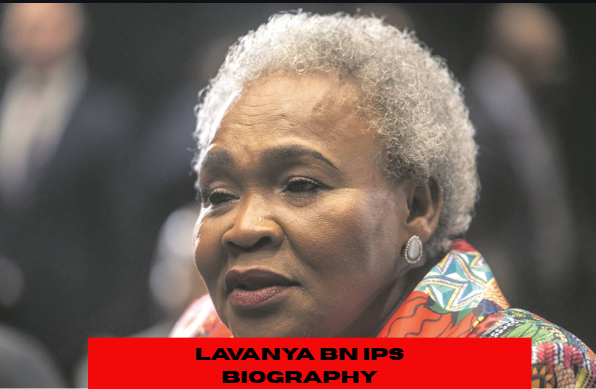
In South African politics, few figures have navigated the corridors of power with as much persistence — and recent controversy — as Nokuzola Gladys Tolashe, known widely as Sisisi “Sisi” Tolashe. A veteran of the African National Congress with decades of grassroots and legislative experience behind her, she currently serves as the Minister of Social Development, a role she assumed after the 2024 general election. She is also the sitting president of the ANC Women’s League, a position that places her at the centre of gender politics within one of Africa’s most influential political movements.
But Tolashe’s story is not simply one of ascent. It is also one of political exile, a comeback, and — as of 2025 and into 2026 — mounting institutional scrutiny that has drawn national attention. Understanding who she is requires looking past the headlines.
Sisisi Tolashe Biography
| Detail | Information |
|---|---|
| Full Name | Nokuzola Gladys Tolashe |
| Nickname | Sisisi / Sisi |
| Date of Birth | 21 December 1959 |
| Age | 66 years old (as of 2026) |
| Nationality | South African |
| Province | Eastern Cape |
| Profession | Politician |
| Party | African National Congress (ANC) |
| Current Role | Minister of Social Development |
| Religion | Not publicly confirmed |
| Tribe/Ethnicity | Xhosa (Eastern Cape origin) |
| Net Worth | Not publicly confirmed |
| Social Media | @SisisiTolashe on X (Twitter) |
Early Life and Background
Sisisi Tolashe was born on 21 December 1959 in the Eastern Cape — a province that has produced many of South Africa’s most consequential political figures, from Nelson Mandela to Walter Sisulu. Growing up in that landscape meant being surrounded by the language of resistance, community, and collective dignity long before those ideas took formal political shape.
Details about her parents have not been placed on public record, which is not uncommon for politicians of her generation who came of age during the apartheid era, when discretion about family identity was sometimes a matter of safety. What is clear is that her roots in the Eastern Cape remain central to her political identity, and she has consistently represented constituencies and communities from that region throughout her career.
Her Xhosa heritage connects her to a rich cultural and intellectual tradition, and it is reasonable to see that influence in her emphasis on social welfare and community-level political engagement.
Education
Tolashe’s formal educational qualifications have not been extensively detailed in public records. Like many ANC politicians of her era, her political formation appears to have been as much practical as academic — shaped through party structures, women’s organisations, and legislative work over several decades.
What she has demonstrated through her career is an understanding of policy mechanics, legislative process, and organisational leadership. Whether or not that came through formal tertiary education or through decades of lived political experience is something her office has not clarified in any official capacity.
Career Journey
Tolashe’s political career did not begin with a dramatic debut. It built steadily, as most enduring political careers do.
She entered formal legislative politics when she was elected to the Eastern Cape Provincial Legislature in 2001, where she served until 2008. Those seven years gave her an intimate understanding of provincial governance — the kind of ground-level experience that often gets overlooked in favour of national spectacle, but which shapes how a politician actually governs.
Her ascent to national significance came when she was appointed Secretary-General of the ANC Women’s League under then-President Angie Motshekga in July 2008. The Women’s League is not a ceremonial body; it has historically been a significant power base within the ANC, influencing party elections and driving gender policy. Serving as its secretary-general placed Tolashe at the intersection of party machinery and women’s rights advocacy.
She held that position for seven years, until she was ousted in August 2015 — a moment that speaks to the factional turbulence that has long characterised internal ANC politics. Being removed from such a position is rarely just about performance; it is usually about alignment, alliances, and internal power struggles. Tolashe’s removal marked the beginning of a period of political recalibration.
Rather than disappearing from public life, she returned to the National Assembly as a backbencher between 2016 and 2018. It was a humbling step for someone who had held executive-level party office, but it was also a strategic one — staying visible, staying active.
In 2018, she took on a very different kind of role: Mayor of the Enoch Mgijima Local Municipality in the Eastern Cape. Local government is often where political theory meets the unvarnished reality of service delivery failures, community frustration, and limited resources. She served in that role until 2019.
Her return to the National Assembly in the 2019 general election signalled that she remained a credible ANC figure despite the internal turbulence of the preceding years. By December 2022, she had been elected to the ANC National Executive Committee — a significant indication of her standing within the party.
The defining chapter of this latest phase came in March 2023, when President Cyril Ramaphosa appointed her as Deputy Minister in the Presidency for Women, Youth and Persons with Disabilities. Then, following the 2024 general election, she was elevated to Minister of Social Development — one of the most resource-intensive ministries in government, responsible for the South African Social Security Agency (SASSA) and social grants that reach millions of citizens.
In July 2023, she was elected President of the ANC Women’s League, completing a remarkable return to the organisation that had once shown her the door.
Leadership Style and Influence
Tolashe’s political career is characterised by resilience. She has been removed from positions of influence and returned to greater ones. That kind of durability in South African politics — where factional battles can end careers — is itself a form of political skill.
As Women’s League president, she has positioned herself as an advocate for women in leadership and for gender-responsive policy within the ANC’s broader agenda. As Social Development Minister, she oversees a department whose decisions affect some of the most economically vulnerable South Africans, from SASSA grant recipients to early childhood development programmes.
Personal Life
Tolashe’s personal life has been kept largely private. Details about her husband, if she is currently married, have not been disclosed in any widely verified public record. She has a daughter, whose name has entered public discourse in the context of the 2025–2026 controversy involving allegations about the transfer of a portion of the minister’s salary.
Her contact number is not publicly available, as is standard for serving cabinet ministers — official communication goes through ministerial offices and the Department of Social Development.
Net Worth and Salary
As a serving Cabinet Minister in South Africa, Tolashe’s salary is governed by the Independent Commission for the Remuneration of Public Office Bearers. Cabinet ministers in South Africa typically earn in the range of R2.4 million to R2.6 million per annum as of recent years, though exact current figures should be confirmed through official government gazettes.
Her personal net worth is not publicly confirmed. Her income is primarily derived from her public service salary and related allowances. No publicly verified information exists about private business interests or other income streams.
Latest News (May 2026)
Tolashe is currently at the centre of significant political controversy. The Democratic Alliance (DA) has announced it will formally write to President Ramaphosa requesting that the Special Investigating Unit (SIU) investigate her conduct and the broader crisis within the Department of Social Development.
The allegations involve claims that a food aid worker — a public servant — was deployed to work at the minister’s private residence rather than her official one, and that a portion of her salary was reportedly handed over monthly to her daughter. The DA has also laid criminal charges relating to alleged deception and undisclosed benefits.
The Public Service Commission has indicated that an investigation into the food aid matter will take place. A Parliamentary Inquiry into the situation also remains under consideration.
Tolashe has not publicly stepped down, and the ANC has not moved to remove her from her portfolio as of early May 2026.
Conclusion
Sisisi Tolashe is a seasoned South African politician whose career spans more than two decades of provincial, local, and national governance. She has survived factional removal, returned to greater office, and now leads one of the government’s most critical ministries. But her current tenure is defined not just by the scope of her responsibilities, but by serious institutional questions that demand transparency. Whatever the outcome of the ongoing investigations, her story — of persistence, reinvention, and now public accountability — reflects the complex, unresolved tensions at the heart of South African governance in 2026.
FAQs
1. Who is Sisisi Tolashe? Sisisi Tolashe, born Nokuzola Gladys Tolashe on 21 December 1959, is a South African ANC politician from the Eastern Cape. She is currently the Minister of Social Development and President of the ANC Women’s League.
2. What is Sisisi Tolashe’s current role in government? She has served as Minister of Social Development since June 2024, appointed by President Cyril Ramaphosa following the 2024 general election.
3. What controversy surrounds Sisisi Tolashe in 2026? The DA has called for an SIU investigation into allegations that a public servant (food aid worker) was deployed to her private home, and that a portion of her salary was transferred to her daughter. The Public Service Commission has confirmed it will investigate.
4. Is Sisisi Tolashe married? Details about her husband or current marital status have not been confirmed in any verified public record.
5. What is Sisisi Tolashe’s salary? As a Cabinet Minister, her salary is set by the Independent Commission for the Remuneration of Public Office Bearers. South African ministers typically earn approximately R2.4–2.6 million per year, though exact figures should be confirmed via official government publications.

Samuel Akinsola is a biography writer and researcher dedicated to uncovering inspiring life stories. He creates well-researched profiles that highlight achievements, challenges, and lasting legacies.