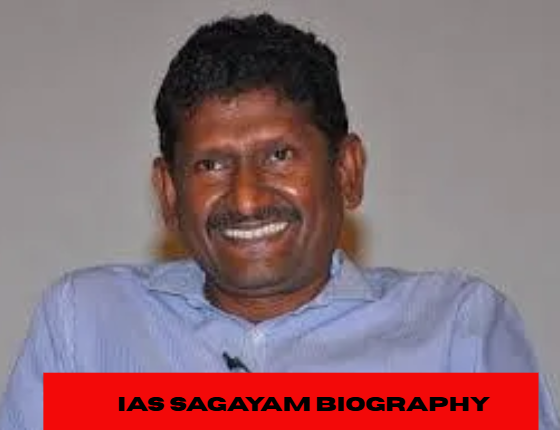
In a system where silence is often the price of stability, U. Sagayam chose noise — and paid for it with over 20 transfers across Tamil Nadu’s administrative machinery. Yet not once was he transferred for incompetence, dereliction, or controversy of an ethical nature. Every single transfer came because he refused to look the other way.
That is what makes Sagayam’s story unusual — even among the thousands of IAS officers India has produced since Independence. He is not famous for heading a major policy reform or appearing on a prime-time panel. He is known because, posting after posting, he did exactly what a civil servant is supposed to do, in an environment that punishes exactly that.
Now 64 years old and retired from active service, Sagayam has stepped into politics — not through a major party’s back door, but by building his own platform from scratch.
| Detail | Information |
|---|---|
| Full Name | U. Sagayam |
| Date of Birth | July 3, 1962 |
| Age | 64 years (as of 2026) |
| Nationality | Indian |
| Profession | Retired IAS Officer, Politician |
| IAS Cadre | Tamil Nadu, 1991 Batch |
| Last Position | Vice Chairman, Science & Technology Dept., Tamil Nadu |
| Political Party | Sagayam Arasiyal Peravai (formed 2021) |
| Religion | Christian |
| Education | Postgraduate (details in section below) |
| Net Worth | Not publicly confirmed |
Early Life and Background
U. Sagayam was born on July 3, 1962, into a farming family in Tamil Nadu. Growing up in an agricultural household shaped him in ways that a city upbringing rarely does — he understood what it meant to depend on fair governance, to need honest officials, and to lose everything when systems are corrupt.
His background is modest. There was no family legacy in administration, no political connections, and no inherited privilege. What his family gave him was something less tangible but far more durable: a sense of dignity tied to honest work.
He belongs to the Christian faith and comes from a Tamil community — details that, in the context of Tamil Nadu’s politically charged identity landscape, carry weight. But Sagayam has never allowed identity politics to drive his public conduct.
Details about his parents are not widely documented in public records, and out of respect for his private family history, no speculation is offered here.
Education
Sagayam pursued his education in Tamil Nadu and cleared the prestigious Indian Administrative Service examination — one of the most competitive civil service exams in the world. He joined the IAS in 1991 under the Tamil Nadu cadre.
The UPSC Civil Services examination demands not just academic excellence but a breadth of knowledge in governance, ethics, economics, and public policy. The fact that Sagayam cleared it is itself a marker of intellectual depth. His career would later show that the ethics he studied weren’t merely academic exercises — they became a daily operating principle.
Career
Sagayam’s career in the Indian Administrative Service began in 1991, and from his very first posting, he set a tone that made him inconvenient to those who preferred administration with flexible ethics.
He placed a motto on his office door that read: “Reject bribery, hold your head high.” It was not a slogan — it was a policy. His first transfer came almost immediately after his initial posting, triggered not by poor performance but by actions that disturbed entrenched interests.
Over the decades, the pattern repeated itself: action, resistance, transfer. Then again, action, resistance, transfer. More than 20 times.
Key moments in his career include:
Shutting Down Illegal Operations: Early in his postings, Sagayam moved decisively against a bottling plant operating illegally and oversaw the seizure of around 5,000 illegal gas cylinders. These were not symbolic gestures — they were enforcement actions that cost certain interests significant money.
Public Asset Declaration (2009): At a time when voluntary public disclosure of assets by civil servants was uncommon, Sagayam declared his assets openly in 2009. This was a deliberate act of transparency, one that invited scrutiny he was comfortable with because there was nothing to hide.
Madurai Elections, 2011: During election duty in Madurai, Sagayam seized ₹20 lakh in cash that had allegedly been set aside for vote-buying. Election integrity enforcement at this level — with real money seized — is rarer than the rules suggest it should be.
The ₹16,000 Crore Mining Scandal, 2012: This is the case that elevated Sagayam from a known name within Tamil Nadu’s bureaucratic circles to a figure discussed in national conversations about governance. He exposed illegal granite mining that had allegedly resulted in a loss of approximately ₹16,000 crore to the state exchequer. The scale was staggering. The pushback was equally significant.
The Graveyard Night, 2015: In one of the more striking episodes of his career, Sagayam spent an entire night inside a graveyard in 2015 to protect evidence from being tampered with. It is the kind of act that sounds dramatic in the retelling, but in context, it reflected something simpler — a man who took evidence preservation more seriously than personal comfort.
Final Role: His last official position was as Vice Chairman of the Science and Technology Department, Tamil Nadu, a role he held from January 30, 2017, to July 31, 2022 — his retirement date.
He also served as District Collector, Joint Commissioner, Secretary, Director, Managing Director, and Special Officer across multiple departments over his 30-plus-year career.
Leadership Style: Inconvenient Integrity
What distinguishes Sagayam from officers who are simply efficient is that his integrity operated in full public view. He did not pursue quiet internal corrections. He declared assets. He spent nights in graveyards. He seized cash during elections.
This is not the style of someone playing a long institutional game. It is the style of someone who decided early that the system’s approval was not a prerequisite for doing the job correctly.
Civil servants who operate this way often face a choice: soften with time, or keep pushing and accept the consequences. Sagayam chose the latter, consistently, over three decades.
Political Party and Post-Retirement Chapter
In 2021, after retiring from active service, Sagayam made a decision that surprised many: he did not join an established political party. Instead, he founded his own — Sagayam Arasiyal Peravai — an unregistered political outfit formed to contest the Tamil Nadu Assembly elections.
His group entered into an alliance with the Tamil Nadu Youth Party and Valamana Tamizhaga Katchi, contesting under the youth party’s symbol. The electoral result was not a sweeping victory, but the intent was clear: Sagayam was not looking for a party that would accommodate his values — he was building a platform that reflected them.
This decision to enter politics independently, rather than riding the machinery of an established organization, is consistent with how he operated as an officer.
Personal Life: Family and Private World
Sagayam has maintained a deliberately low public profile when it comes to his personal and family life — a position that deserves respect.
He is married, though his wife’s name has not been prominently featured in public reporting. Details about his children are similarly not widely circulated. What is known is that he has maintained a stable family life throughout a career that involved constant relocations due to transfers — a logistical and emotional challenge that anyone in a frequently transferred posting would understand.
His family has not been drawn into the spotlight, and there is no indication that Sagayam has used his family as part of his public image.
Regarding his height and physical details — these are not documented in any verified public source and are not included here.
Net Worth
Sagayam’s net worth is not publicly confirmed in any specific figure. What is known is that he voluntarily declared his assets publicly in 2009 — an act that signaled he had no reason to hide his financial standing.
His income throughout his career was derived from his IAS salary and government allowances. Post-retirement, any income would likely relate to his political activities and public engagements. There is no verified reporting of significant private business interests.
For someone whose defining public act is refusing bribes, the nature of his financial profile is largely consistent: a career civil servant who lived within the bounds of government compensation.
Social Media
While Sagayam is not known for a heavy social media presence, information about his political activities and public engagements can be followed through Tamil Nadu news platforms and political coverage. As of 2026, verified official social media handles under his name have not been prominently established in public records.
Conclusion
Twenty-plus transfers would have broken a different kind of officer. For Sagayam, each one became part of the record — evidence that he was doing something that mattered enough to disturb powerful people.
His story is not a fairy tale about a system that rewarded honesty. It is something more honest than that: a portrait of a man who decided the system’s rewards were not worth compromising for. He exposed a ₹16,000 crore mining scam. He seized vote-buying cash. He protected evidence in a graveyard at night. And then he retired and started a political party from scratch.
Whether his political chapter delivers the same impact as his administrative one remains to be seen. But the pattern of his choices — consistent, public, and costly to himself — gives few reasons to doubt his sincerity.
FAQs
1. What is IAS Sagayam’s political party? Sagayam founded Sagayam Arasiyal Peravai in 2021, an unregistered party, and contested Tamil Nadu Assembly elections in alliance with the Tamil Nadu Youth Party and Valamana Tamizhaga Katchi.
2. How old is IAS Sagayam? He was born on July 3, 1962, making him 64 years old as of 2026.
3. Why was IAS Sagayam transferred so many times? Each transfer was linked to his enforcement actions against corruption and illegal activities — not poor performance. He faced over 20 transfers across his career.
4. What is the ₹16,000 crore mining scam Sagayam exposed? In 2012, Sagayam uncovered illegal granite mining operations in Tamil Nadu that reportedly caused a financial loss of approximately ₹16,000 crore to the state government.
5. What was IAS Sagayam’s last posting? His final position was Vice Chairman of the Science and Technology Department, Tamil Nadu, which he held from January 2017 until his retirement in July 2022.

Samuel Akinsola is a biography writer and researcher dedicated to uncovering inspiring life stories. He creates well-researched profiles that highlight achievements, challenges, and lasting legacies.